
Top Surgery Instruments in Every Operating Room

If you are looking for perfect surgery then you must have these surgery instruments in your operating room. However, you want to make every surgical procedure successful then the skillful professional and the best surgery instruments are the keys. These tools come with different treatments like, tissue holding, cutting and suturing with perfection.
Moreover, these tools will be beneficial for experts to save energy, time and provide comfortability to the patient. Therefore, Below We discuss about the top 10 must-have surgery instruments that every operating room should equipped with.
Top Surgery Instruments
These instruments crucial for making sure that surgery is performed correctly, safely, and with the best possible results for patients.
1. Scalpel
This small surgery instrument is like a sharp knife, often used for cutting through skin or other tissue structures during surgery treatments and comes complete with both a handle and non usable blade which can be replaceable. Surgeons are depending heavily on scalpels for accurate cutting during various types of surgeries; hence their presence being integral parts in many other processes as well.
2. Scissors
It’s one of the crucial surgery instruments, sutures and other materials during procedures, surgical scissors have specialized blades such as straight or curved tips designed specifically to maximize precision and functionality during surgeries.
The scissors come with different kinds of surgical scissors design for specific treatments, including Mayo scissors for cutting heavy tissues.
3. Forceps
These surgery instruments use for gripping and holding instruments used extensively during procedures. Resembling tweezers but typically larger and stronger for specific tasks, forceps may use to grasp tissues, blood vessels or foreign objects during surgery. They come in numerous varieties including these commonly-seen forceps types:
Tissue forceps:
Used for grasping and holding soft tissues such as skin or muscle.
Hemostatic forceps:
Used to restrict blood vessels and stop bleeding.
4. Needle Holder
These surgery instruments are crucial for wound suturing. The surgeons use these tools for accuracy and the strong grip during the procedure. The purpose of needle holder is to hold and secure needles during stitches.
5. Hemostats
These instruments present in different sizes and features and each tool works differently to stop bleeding from various parts during the surgery. They play an immense role in successful surgery procedures.
- Kelly hemostats: For larger blood vessels.
- Mosquito Hemostats: These hemostats can help control smaller blood vessels.
6. Surgical Sponges
They are crucial instruments for cleansing and absorbing bleeding and fluid material during operation. They also cleanse surgical parts and absorb blood. Surgical sponges work for more purposes than simply absorbing fluids; they’re commonly design to packing wounds or germs to control bleeding.
7. Surgical Drapes
These surgical instruments us in surgery rooms to experience infection free in operating rooms to keep an infection-free environment and limit poluted during procedures. By covering only surgical sites with these protective covers, surgical drapes help make sure a hygiene environment provided during procedures. Their purpose is to avoid contamination while decreasing risks during procedures.
Drapes
They come in various sizes and designs; some are even customized specifically to ensure patient safety during surgeries. Surgical drapes basically design for
Suction Devices
Suction devices play an essential role in keeping surgical areas free from blood, fluids and debris during procedures; their presence ensures clear views into what areas need attention during surgeries as the excess liquids and moisture can be suctioned away, leaving only dry fields.
9. Surgical Drills
Surgical drills are used in procedures requiring drilling of bones or hard tissues, including orthopedic, dental and neurosurgery procedures. Surgical drills come equipped with various attachments such as burrs or cutting tools designed for specific tasks to assist them.
Drills used in orthopedic surgery to create holes in bones for screw, plates and other hardware to be placed. Their precision allows surgeons to make clean cuts without inflicting damage upon surrounding tissues.
10.Retractors
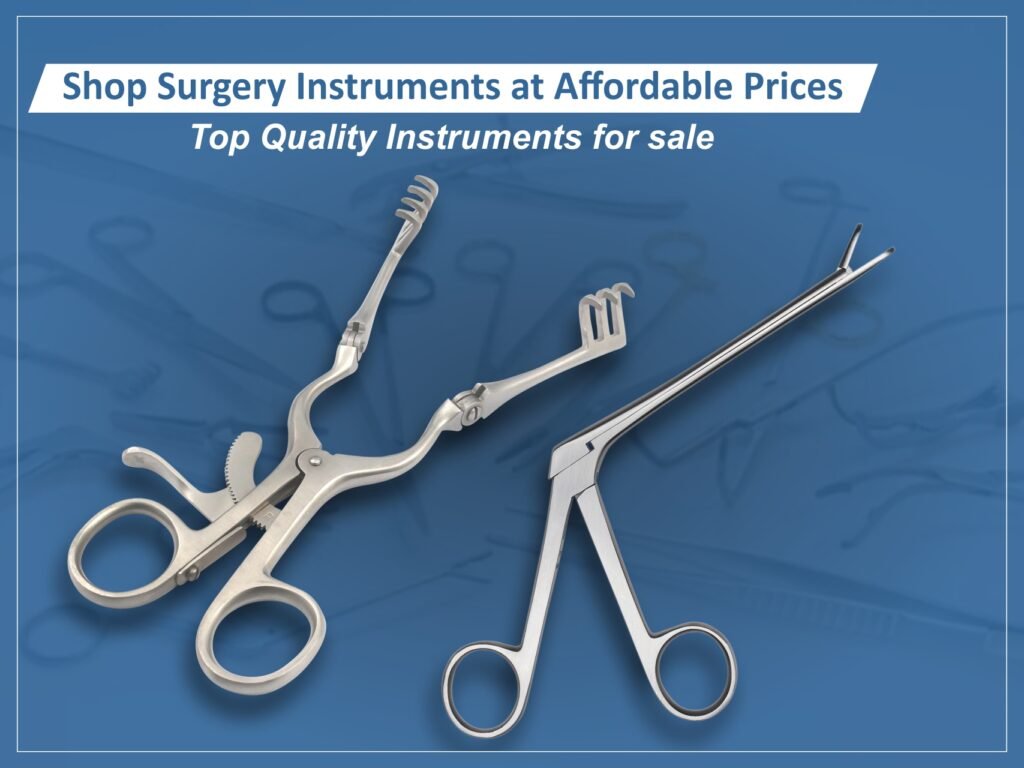
Retractors use to temporarily pull back tissues such as skin, muscle or organs in order to give surgeons easier access to an area being operated upon. There are various kinds of surgical retractors available on the market such as handheld and self-retaining types that provide access to deeper tissues more safely. Some commonly utilized models of surgical retractors include:
Conclusion
Surgical Instrument Online provides a wide variety of surgery instruments for different treatments like, cutting, holding tissue and suturing. The tools designed with high quality material that provide longevity and smooth work in all surgical fields. Read the above post carefully to have knowledge about these different surgery tools.